Published on this page in the GuitarFella archive — what our editors chose at the time, not a lab test.
Last Updated Nov-10-2018.
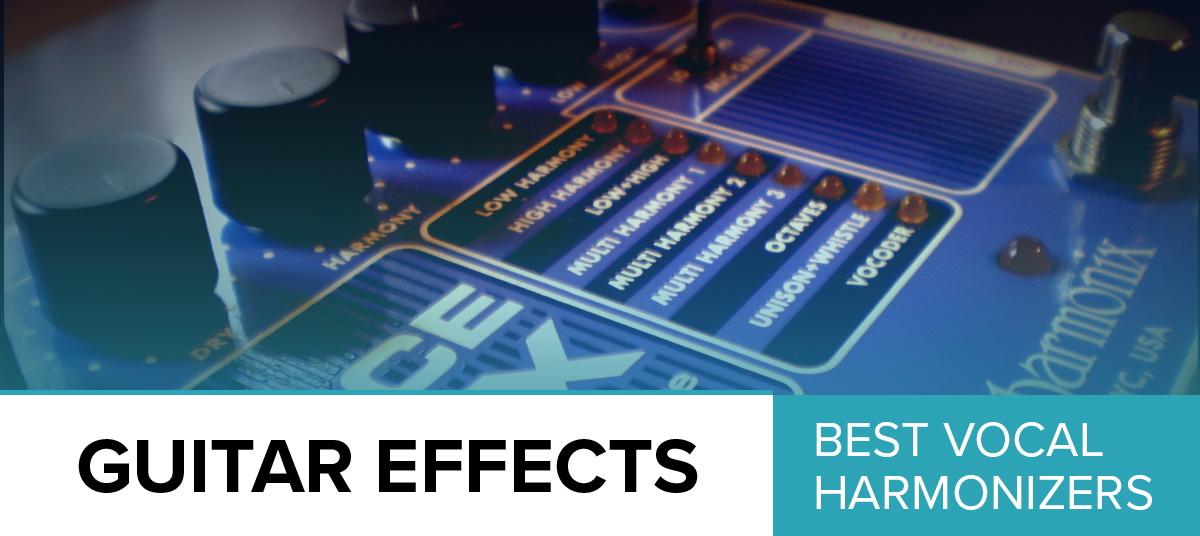
Vocal harmonizers are one of those effects pedals that add more than just a bit of flavor to your tone. They have the power to completely change the perception of your song. Due to ease of use, harmonizers have become the favorite tool of acoustic guitar players around the world.
Today we are going to check out some of the best models out there, which are easily among the
best guitar effects pedals in general. If you are looking for a true force multiplier for your rig, stay with us as we explore the world of vocal harmonizer guitar pedals.
7 Best Vocal Harmonizer Pedals
What Does A Vocal Harmonizer Do?
These pedals in their modern sense are audio processors. You feed both your guitar and your microphone into the pedal and it essentially creates a harmonies that follow the tonality of what you are playing on a guitar. In much simpler terms, a harmonizer gives you a chorus type effect for your vocals. On its own, having a vocal harmonizer in your kit is a mighty tool. With one of these pedals, you can hit the stage with just a guitar, a microphone and an amplifier.
Whenever you want to give a specific section of the song some girth, just press that switch and you have it. Older pedals were much simpler. Instead of tracking what you are playing on a guitar, you would simply manually select a key of choice. Some of the modern models also have this feature, which is a nice safety if the pedal starts having issues with tracking.
Considering that every model features both XLR and TRS ports, you can use this pedal with a variety of other instrument. Basically, anything that is powered and amplified is a go.
Modern Vocal Harmonizers
These pedals much like most of today's guitar effects, have evolved considerably over time. As technology advanced, we have gained access to more powerful processing units that could handle numerous tasks at once. This is partially why just about any vocal harmonizer you can pick up on the market, has perfect tracking abilities. There is simply enough CPU power behind the effect to drive it to that level.
Aside from accurate tracking, modern models are packed with a whole array of additional options. These include effects like reverbs, which often come in form of
legendary reverb pedals made by that manufacturer in the past. They simply take the signature of that pedal and port it into the harmonizer. Same goes for
delay pedals.
Still, those are all features you more or less expect to see. Where modern models really come to shine is automation. If we take the TC Helicon Play Acoustic from our list as an example, we will see that this pedal features what is called an Adaptive Tone technology. This feature automatically EQs, de-esses and generally tunes your vocals as you perform. TC Helicon is not the only brand that features tech like this, but theirs is by far one of the best.
How To Choose The Right Vocal Harmonizer
Much like with other things in life, there is always that catch hidden somewhere. With vocal harmonizers, it's their price. If you want a top tier unit, excluding more inclusive processors, you can expect to pay a decent amount of money. The very first step in choosing the right one is to define your budget, but more importantly, define your intended use for this pedal.
If you can live without all of the extra features, chances are you will find some pretty attainable models. On the other hand, if you insist on having the latest and greatest, that will put a dent in your finances. Another thing to keep in mind is the type of harmonies offered. Every brand tries to present their own take on this effect, but they generally always include neutral harmony modes. The point here is to find a model whose 'unique' harmonies are right up your alley. As you could expect, this requires quite a bit of research. If you do everything right, all of that effort will pay out several times over.
Limitations Of Vocal Harmonizers
It is no secret that modern units are powerful, however they still have some limitations. One limitation you are probably going to run into is the lack of range. That means that the pedal is going to run out of available pitch, at which time you won't get the effect anymore. Those pedals that have manually adjustable key often offer a hybrid mode of operation. When used, this mode will track your chords until it runs out of range and then just default back to whatever value you've manually selected.
The other limitation is outpacing the processor unit in the pedal. Even though this rarely happens anymore, there are some instances where you can just be faster than the active tracking capability of your harmonizer. This is an issue that is present in various pedals that depend on active tracking. Some are more susceptible than others, but the technology is slowly closing that gap for good.
Conclusion
Vocal harmonizers are one of those niche pedals that only work in specific situations, but have the power to completely change your tone. If you're running a minimalist setup for unplugged sessions, one of these units can add some serious girth to your music. Best thing about them is that most of the ones you can find right now are awesome in almost every regard. Sure, some are better than others, but you'll usually get a very solid core performance. Lastly, vocal harmonizers are the type of pedals that urge you to explore your skills, both vocal and guitar related.