Published on this page in the GuitarFella archive — what our editors chose at the time, not a lab test.
Last Updated Nov-11-2018.
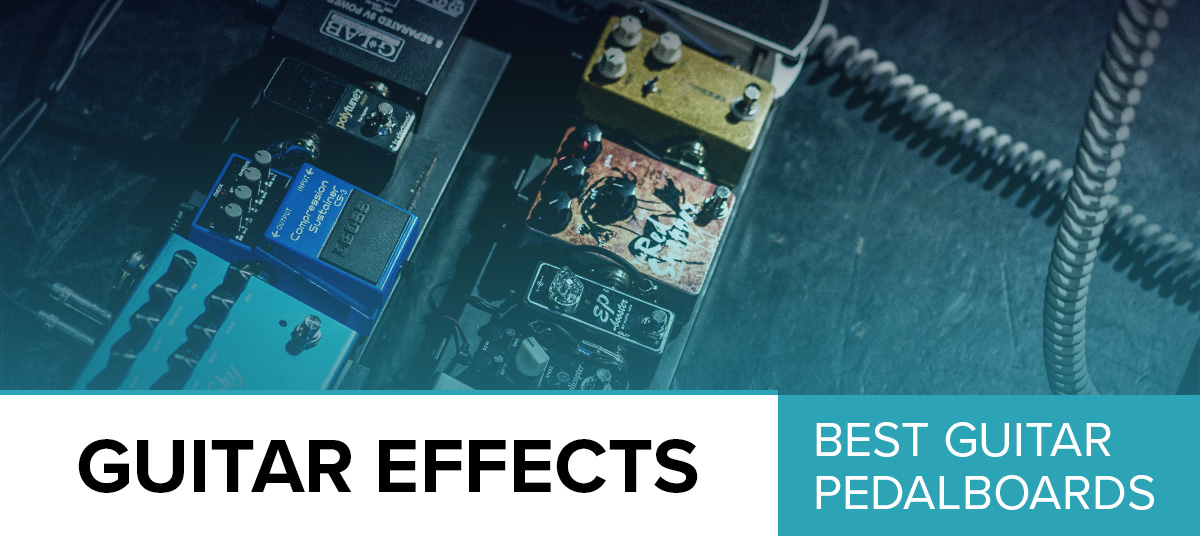
There comes a time in every guitar player's musical journey when buying a pedalboard simply becomes a must. This usually happens around the purchase of the third pedal, when most folks realize that there is only so many pedal that a single power adapter can cover.
So what exactly is a pedalboard? Well, on one hand it's essentially a casing to store
all of your "top" pedals in, but there's way more to it that meets the newbie eye. The most important aspect of a pedalboard is the electronic department, as the device contains intricate wiring that allows you to connect a number of pedals within it, and then plug the whole thing into a single power socket.
And seeing that individual pedals require one power source each, you should get the idea on why boards are so essential. Anyhow, we took the liberty of sifting through today's market in an attempt to find the best guitar pedalboard in the world. We looked through a variety of price ranges and narrowed our choices down to 10 champions. If you're up for it, the rundown patiently awaits below, along with some other tips and discussions.
Important note before we start: Pedals are NOT included with pedalboards and need to be purchased separately. Let's do this now!
Top 10 Pedalboards:
With all that stuff out of the way, let's focus on a few things you should know when buying a pedalboard and some of the frequently asked questions we get from customers.
What to look for when buying a pedalboard?
When it comes to pedalboards, there's actually less factors and criteria to look out for that when a buying a guitar or even those very pedals you plan on sticking to the board.
It's quite simple – you need a sturdy built, practicality, good electronics, enough room, some nice looks according to your taste and good value for money. As far as sturdiness goes, it's best to go with metal design, although plastic models can do just fine as well. Look for devices with electronic sections and jacks well protected, and also seek items where pedals can stand strongly in place.
As for practicality, you'll need boards that are easy to carry, assemble and disassemble. The electronic department stands out as the trickiest beast, so make sure that the offered power fits your pedals' requirements and that there's no crackle upon plugging in.
It is also important to know how many pedals do you plan on using, how many you currently have and when you will reach the desired number of pedals. Pedalboards come in various sizes and can usually fit anywhere between 4 and 12 devices. Jot down how much room you need and pick your best option based on that.
In the aesthetic department, most pedalboards are fairly similar, but there are some wilder options too; just look around and see which one feels the best. As for value for money, that's where we come in to (hopefully) help.
Essentially, these are the factors we looked for upon sifting the market, and we believe that the listed items match those criteria in the best way.
How much money to spend to get a good pedalboard?
This is where the aforementioned number of pedal you use comes into the picture. The price is greatly determined by the board's ability to house more or less pedals, and of course grows with the number to devices you can connect to it.
But a few basic price limits can be set here, and we can say that for around $50 you can get a decent board for 4 pedals, while $75 is the price for models housing up to 6 pedals. If you need 10 pedals, $100 is the price, while the $150 figure hits the soft spot for 12 devices.
As noted, this is the number for decent and good pedals that are sturdy and get the job done. If you want some extra perks and qualities, further investments are of course possible.
Do I need to get any accessories with a pedalboard?
Yes, additional bits of gear are needed, but often included in the mix too. Specifically, you'll need a power adapter, a set of small cables to connect pedals, and of course two standard cables to go from the board's one end to your instrument and from the board's other end to the amp.
There's a solid number of cases where the adapter is included in the mix, while some products also include small cables, although that's a tad more rare. As far as music gear goes, pedalboards are one of the items that require the smallest amount of extra payments for necessary additional gear. But when you think about it, a pedalboard IS a necessary extra investment for players who want to have more pedals, so it's all a matter of perspective we suppose. Anyhow, hopefully we've covered this question properly, on to the next one!
Can I make my own pedalboard?
This question is frequently raised among musicians, and that makes sense because a pedalboard is not an intricate item as far as music gear goes. Many folks thing that basic knowledge of electronics and craftsmanship is enough to make a board, and many of them are wrong. So while we're not saying that homemade pedalboards are impossible, we are saying that you better know exactly what your doing – especially in the electronic department - if you're going to venture into this endeavor. No matter your decision you should still consider a
high quality pedalboard power supply.
On the other hand, if you really know what you are doing, making one of these puppies can be an interesting activity, and there's nothing wrong with giving it a go. Just watch out when playing with electricity, please!
New vs. used guitar pedalboard
Pedalboards aren't exactly a pricey piece of equipment, but some savings can still be made if buying a second-hand product. There are two things to watch out for – one is of course any type of visible physical damage, primarily on fragile parts such as hooks and handles. Where it gest tricky is the electronics section, as it's difficult to tell the shape of wiring and internal connections based on taking a look, or even testing the board.
And that's basically the main reason why we believe that it's the best option to get the new one. It will save you time and nerves, and you will get a warranty that's usually no shorter that a year and goes as high as five years, or even a lifetime in some cases.
What's the best pedal order in a pedalboard?
This is a question so many guitarists out there are asking that we decided to give it a significant portion of space around here. So, how to organize your pedals and what's the best signal chain?
As the one and only guitar virtuoso Steve Vai once said, this order is not exactly of the greatest importance and it often comes down to preference and personal taste. However, a string of pretty objective guidelines and factors to follow in order to get a better sound also exists, hence we decided to delve into the whole matter a bit more thoroughly. While this is not the definite way, it's a combination that many players use and something we believe works quite nicely. Check out the goods below.
1. Overdrive and gain-driven pedals first
By drive pedals we don't mean just the basic
overdrive effect, but also anything related to it. This includes
distortion, boost, fuzz, and similar gain-driven gentlemen. The primary reason why these dudes have secured a place up on the front line is because distortion should be as close to your instrument's original clean signal as possible.
The goal is to distort and overdrive the purest form of your sound, and that is obviously achieved by placing those drive pedals first. In case you are using both overdrive and boost, we find it is a good idea to place the boost first so the drive pedal gest the strongest possible signal. So in a nutshell, drive + clear signal = sonic bliss!
2. Wah and EQ pedals second
Up next in line are wah and equalizer pedals. These devices operate quite nicely when plugged directly into a sonic signal that has been affected only by overdrive, boost or distortion.
The wah is simply a type of effect that sounds top-level when it has distortion backing it up, while the EQ will give
that overdrive a boost that will brighten up the final audio output and sound better.
Also, if you want to use a compressor pedal, it fits somewhere around here – if you want a more natural and rock tone, place the pedal right after the distortion or EQ effects. However, if you are after the classic country vibe, compressor should be placed right at the very end of the chain so it gives the sound a nice little squash.
3. Modulation effects are third
Up next, we bring you the modulation. The "modulation effects" is an encompassing term that brings together such devices as
chorus, flanger, phaser, and vibrato pedals. As for the reason why the modulation crowd is at No. 3 is because their sound is significantly richer and more complex when placed after overdrive, wah and EQ.
It is also a common belief that pedals of this kind should NOT be put at the very end of the signal chain as they can overpower the other effects that were placed before them. And if that overpowering happens to be the entire pedal chain, that's simply not good.
4. Time-related effects at the end
If you're wondering what are time-related guitar effects, it's delay and
reverb. Putting these guys at the very end of the signal chain secures a more natural echo, which is exactly what you need.
And if you are using both reverb and delay – which is cool and not a rare case at all – experts agree that placing reverb at the very end is the way to go, as it brings a natural echo to all the effects that come first. Another option you have is use built-in reverb coming from your amp. This one is a viable solution, but also expect a bit more twang in the final sonic attack.
Conclusion
Thus, in a nutshell, the listed 10 devices stand out as clear contestants for the flattering title of the best guitar pedalboard on the market today. We did our best to cover a variety of budget ranges and types of items, so it is now up to you to jot down your personal preferences, needs and available spending budget, and single out the product that suits you best.
To stay in loop on the best gear deals on the web and reviews of quality musical equipment, make sure to track Guitar Fella and follow the site for further updates. Thank you for your attention, you've been lovely!