Published on this page in the GuitarFella archive — what our editors chose at the time, not a lab test.
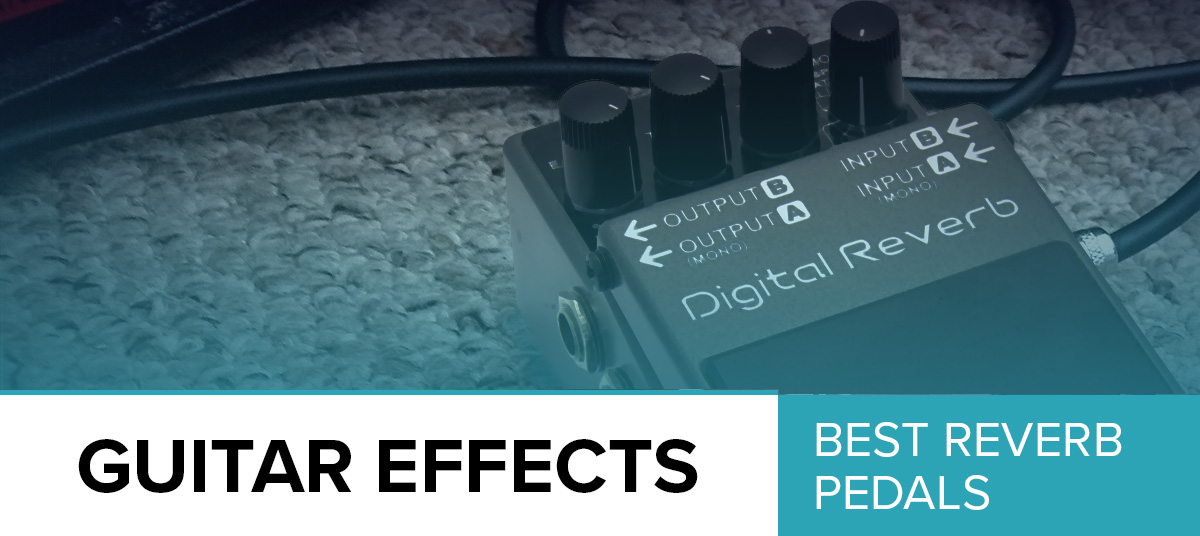
Last Updated Oct-4-2019.
We refined our list and expanded the guide on reverbs.
Reverb has a very special place in the guitar community and music scene as a whole. It is one of the oldest effects ever used across just about every genre you can think of.
Today we are going to show you
some of the best effects pedals from this category, which you can get right now. We have chosen a variety of flavors as well as price ranges, thus making sure that anyone can have access to a good reverb no matter what. More importantly, we want to use this opportunity to familiarize you with reverb as a guitar effect.
10 Best Reverb Pedals:
What Exactly Is Reverb?
Reverb is a sound effect used both in music and audio engineering, which adds a spatial dimension to the original track. To put it into more simple terms, a reverb gives you an impression that the sound is originating in a large room. You are hearing the source sound but also its numerous iterations as it bounces off different surfaces. Reverb guitar effects pedals offer a simulation of this phenomenon.
With that said, it's important to make a distinction between reverb pedals and echo pedals. These two are often time a source of major confusion. Here's the deal. Reverb is similar to an echo in a sense that you are hearing the sound as it bounces off a surface. However, reverb is fairly quick and happens almost instantly. Echo effect, on the other hand, takes much longer to reach back to the user. One way to understand the difference is to yell in a smaller room, and then go out and yell in a canyon. Similar goes for delays. If you want to learn more about delay pedals,
check out our dedicated guide here.
Short History Of Reverb And Its Origins
Even though recorded sound traces back to late 1877, the widespread access to this technology has only become available some 60 years later. As we go back in time, reaching 1940s, we run into the first ever instance of reverberation being used in music recording. It didn't really take long for this trend to become popular, spreading throughout the world. However, back then there were no effects pedals or anything similar. Devices we have today were science fiction at best. Old school producers had to resort to various other means to achieve the reverb effect.
One of the first successful methods was to record a track as you would any other. Then you would take the recording and play it through a speaker that is placed in a very large room. The magic happens when you put a microphone somewhere in that room to essentially record the sound of a recording. However, by placing that speaker in a large room, they have added a layer of natural reverb.
Due to the ever rising popularity of reverb, it didn't take long for companies to figure out how to recreate the effect in early guitar amps. Have you ever heard of Spring Reverb or Plate Reverb? While to you these are just labels on a knob, back then these were real analog devices built into amplifiers. Needless to say, we have come a long way from using complex mechanical contraptions to create decent reverb.
What Makes It So Attractive?
To answer this question, all you need to do is close your eyes and focus on what is currently going on around you. Just about every sound you hear, whether you are at home or on a busy street, is packed with some dose of reverb. In nature, sound reflects off of multiple objects and surfaces across various distances. Both our ears and our brains are used to reverb by default. That is one of the reasons why even an artificial reverb effect tends to make a track more enjoyable.
Naturally, it all comes down to manipulating the effect to fit the occasion. There is definitely such a thing as too much reverb or not enough. However, this is the type of thing you will have to figure out on case to case basis. With that said, you would be surprised at just how often reverb is used in music these days. Some sound engineers and producers like to be subtle to a point where you won't notice the reverb unless you are actively looking for it. Others tend to go overboard in order to express themselves.
What Types Of Reverbs Are There?
Back in the day when first amps with built in reverbs hit the markets, you only had one or two types of this effect to choose from. These days, things are a bit different. Two of the most popular types of reverbs are plate and spring reverbs. The latter is the original built in effect, while the former represents a more advanced evolution.
Original plate reverbs were mechanical in nature. There was a literal plate inside the amplifier, which would transform input signal into vibration. Then you would have a pickup located somewhere near the plate, that recorded those vibrations. Today, such a contraption comes across as relatively crude, but many still love the unique mechanical sound it produces. Spring reverb uses a pretty much exact same principle, only this time you have a spring in there instead of a plate. The biggest improvement a spring reverb offers is reduction in both weight and size of the device.
More modern types of reverb include hall reverbs, and all kinds of other emulations. A modern reverb unit, which is often digital, relies on various algorithms to emulate different spaces. Even so, most guitar players still prefer one of the original two.
Built In Reverb VS Reverb Pedals
One of the more common questions beginners have is why even bother with reverb pedals when most modern amps have a built-in version of this effect? To be honest, if you have a vintage tube amp with an actual spring reverb inside, there really isn't a good reason to go with a pedal. However, most don't. The thing that makes reverb pedals a much better solution in most cases is that you get a level of quality that can be used on stage.
Once you start getting into reverb, it won't be long before you start noticing different nuances of this effect. A good portion of digital reverbs sound too sterile, while some analog can be too narrow in range. Finding that perfect type of reverberation matters if you are serious about building your guitar tone properly. Built in reverbs you usually see in lower quality amps are good for home practice and not much more. That isn't to say that the added value of them being available in the first place is a bad thing. No, but you can't really rely on those reverbs to get you anywhere serious. On top of that, a good analog reverb pedal is a one time purchase.
How To Use A Reverb Pedal Effectively?
Using a reverb effect is a form of art, as cliche as that sounds. Everyone has their own way of doing things, which is normal considering that different people have different taste. Even so, we can boil everything down to several rules which most of the community can agree upon. The very first one is that moderation is your best friend.
You will definitely want to start slow, with an almost completely dry signal, and start adding some reverb bit by bit. Depending on the type of music you are making, that subtle hint of reverb may be all it takes to get the point across and make that track sound more organic. If you want to take things a bit further, recording a completely dry track and then mixing it with the very same section with added reverb can yield some pretty interesting results. As you have probably noticed by now, experimentation is the key here. The most important thing is to start slow.
Reverb Pedals And Signal Chains
Another piece of advice most experienced guitar players will give you is to keep your reverb pedals near the end of your signal chain. The reason for this is simple but requires a more colorful explanation. Imagine your signal chain as a conveyor belt for ice cream. As the signal leaves your guitar, it is just a plain vanilla mass that gets another layer of flavor as it hits different pedals. Distortion might add a nice chocolate glazing, then we have the modulation with its meticulous icing, and so forth. A reverb pedal in this context are sprinkles. You don't want to add them at the beginning since they can completely change the way every other ingredient that comes afterward behaves. You add sprinkles at the end. In appropriate amounts only.
This general tip applies to all so-called temporal effects. Anything that messes with the timing of the signal should come last. If you were to put reverb before distortion, which is often one of the first effects in a chain, that distortion would be applied to both the original signal and all of the echoes. In other words, you'd get a mess. Naturally, this isn't a rule written in stone. There are always exceptions. However, it is best to start with reverb at the end as this is the most neutral position.
Functions Of A Reverb Effect
Reverb pedals come with all kinds of different layouts. Even so, some of the controls are virtually universal. The first one we would like to mention is the dry/wet knob. This control is what you use to mix your original signal and the effect itself. When the knob is turned all the way to dry, there will be zero reverb present in the signal. As you move towards wet, the amount of reverb increases.
Next important control knob is usually labeled as time or rate. This defines the length of echoes in a reverb. You can have them short or you can have them last for a fairly long time. Which side you will lean more towards is going to depend on the nature and tempo of your music. Slower, more subtle riffs can easily deal with long reverb times while faster sections usually work best with short reverb. Again, experimentation is the key here.
Conclusion
Reverb is one of the most popular guitar effects in use. It's so subtle, natural and valuable that it can easily turn a mediocre track into something more profound. The pedals we have listed above are by far some of the best you can get at the moment. They are not all the same, and each offers its own take on reverb in general. However, all of them will serve you more than well in your search for that tasty reverberation. Lastly, we hope that this guide has helped to clear up some misconceptions about reverbs you might have had.