Published on this page in the GuitarFella archive — what our editors chose at the time, not a lab test.
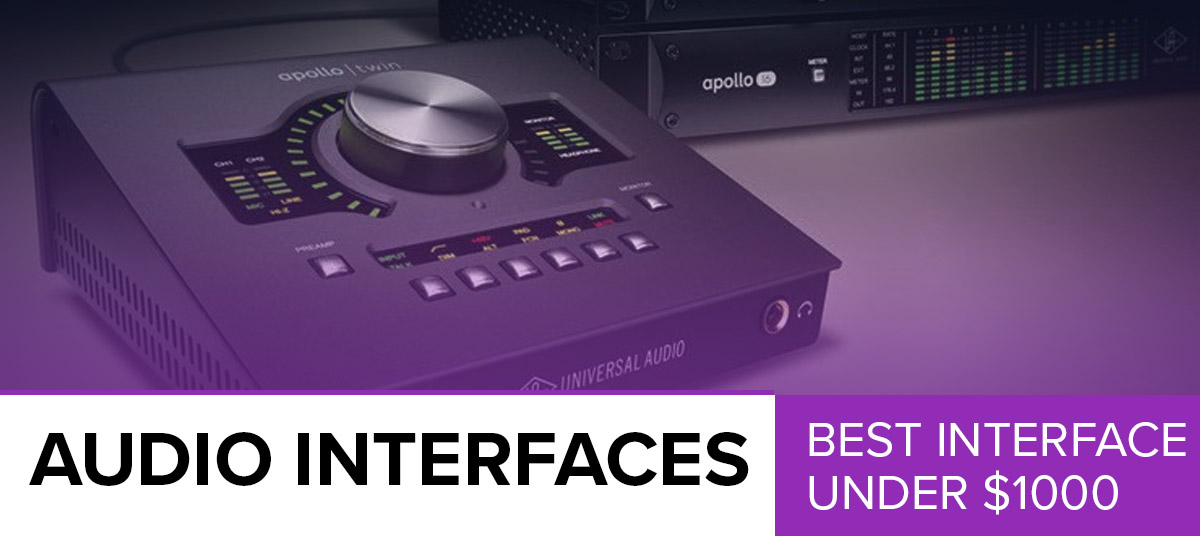
Last Updated: November-16-2018
In our article on the best higher-end audio interfaces, we made some changes to the information in our article as well as a few tweaks to the list of recommendations. We replaced one MOTU model with another, removing the 896Mk3 Hybrid and instead adding the super-cool UltraLite AVB.
In today’s article we are looking at
the best audio interfaces that you can find for under $1,000. While higher-priced units certainly do exist, one thousand bucks is about as high as most people want to go – especially when you consider the other things you need to invest in to make a decent studio these days (i.e.
studio monitors, MIDI controllers, headphones, microphones and the rest!).
To make things easier, we have selected a handful of different units that fit this price range and have taken more in-depth looks at them in their full reviews. Browse the chart below, then stick around for a guide on what to look out for when shopping in this range.
Top 7 Best Audio Interfaces Under $1000
What to Expect From a $1,000 Audio Interface?
When you start investing such a hefty chunk of cash into recording gear, you aren’t solely looking at better sound quality. It sounds obvious, but there are several benefits of buying a higher-end unit over a budget or
mid-range audio interface. Let’s take a closer look at each one of these benefits and at why they matter.
Connectivity
Starting with connectivity, in this price range you will find USB 2.0, Firewire and Thunderbolt connections used to connect audio interfaces to your computer. Contrary to popular belief, USB 2.0 is still a very viable solution, even when you have up to 30 inputs in your interface.
With that said, you will see many more Thunderbolt and Firewire-based units in this segment of the market. Both of these advanced connection solutions are created to work efficiently in a professional environment, and guarantee fast speeds, high bandwidth and a low latency for the most effective monitoring.
For some, there is simply no incentive to pay more for a Thunderbolt model if they can get by with USB 2.0. Similarly, some producers and audio engineers may require the zero latency that Thunderbolt is known for, and will snub anything without it. What you go for will depend on what works best for your specific needs. Always remember that some computers don’t have Thunderbolt or Firewire ports – check yours before buying an interface with such a connection!
Form Factor
Just one quick glance at our list reveals all kinds of designs, although they are still split between both desktop and rack-mounted units. In this price range you do see a lot more rack-mounted devices compared to a lower-end category, such as the
audio interfaces under $200.
This isn’t necessarily a benefit to everybody, as many shopping in this range will still be happy with desktop units due to their low desk real-estate requirements and portability. However, if you have a bigger operation, you will already cram anything you can into a rack to save space, so having the option of more rack-mounted devices will be a plus.
I/O Options and General Versatility
One of the main benefits reserved for $1,000 audio interfaces are hugely versatile I/O options. The most common layout for professional audio interfaces is to offer at least eight analog inputs and analog outputs (usually in the form of combo XLR/TRS inputs or dedicated 1/4” ports).
The rest will come through ADAT ports, which allow you to expand the number of I/O options by at least ten. Digital channels may be a niche feature, but they are excellent solutions for bigger recording projects and busy studios – especially those recording full drum kits.
You will see a variety of I/O combinations in this segment, some with up to 60 I/O options, with other offering around 10 to 20. As always, choosing the right one comes down to your own needs and preferences.
Built-In Features
Alongside inputs and outputs, built-in features are probably the next most important benefit of owning a high-end audio interface. Features can come in many forms. For example, some audio interfaces include onboard EQ tools and various effects, while some have very complex metering clusters or even analytical tools.
It can seem tempting to go for an interface packed with features, although try to determine whether you will actually need them. If you don’t, chances are that you can get by with a much cheaper interface. However, if you are serious about your work and demand the highest level of both performance and versatility, some of these features are an essential factor.
The Final Word
High-end audio interfaces are expensive, but they definitely have plenty to offer for the hefty price tags they come with. In all honestly, this type of gear transcends the experience you may have had with an affordable audio interface. Whether lightning-fast connections or more I/O options than you know what to do with, you have entered professional territory where great performance is guaranteed!
The models we have highlighted in our chart are by far some of the best on the market in 2018. Whether you go for one of these or explore the market by yourself, we hope this article has been of use and offered a little inspiration. Good luck with your new interface!